
Last updated October 31, 2026
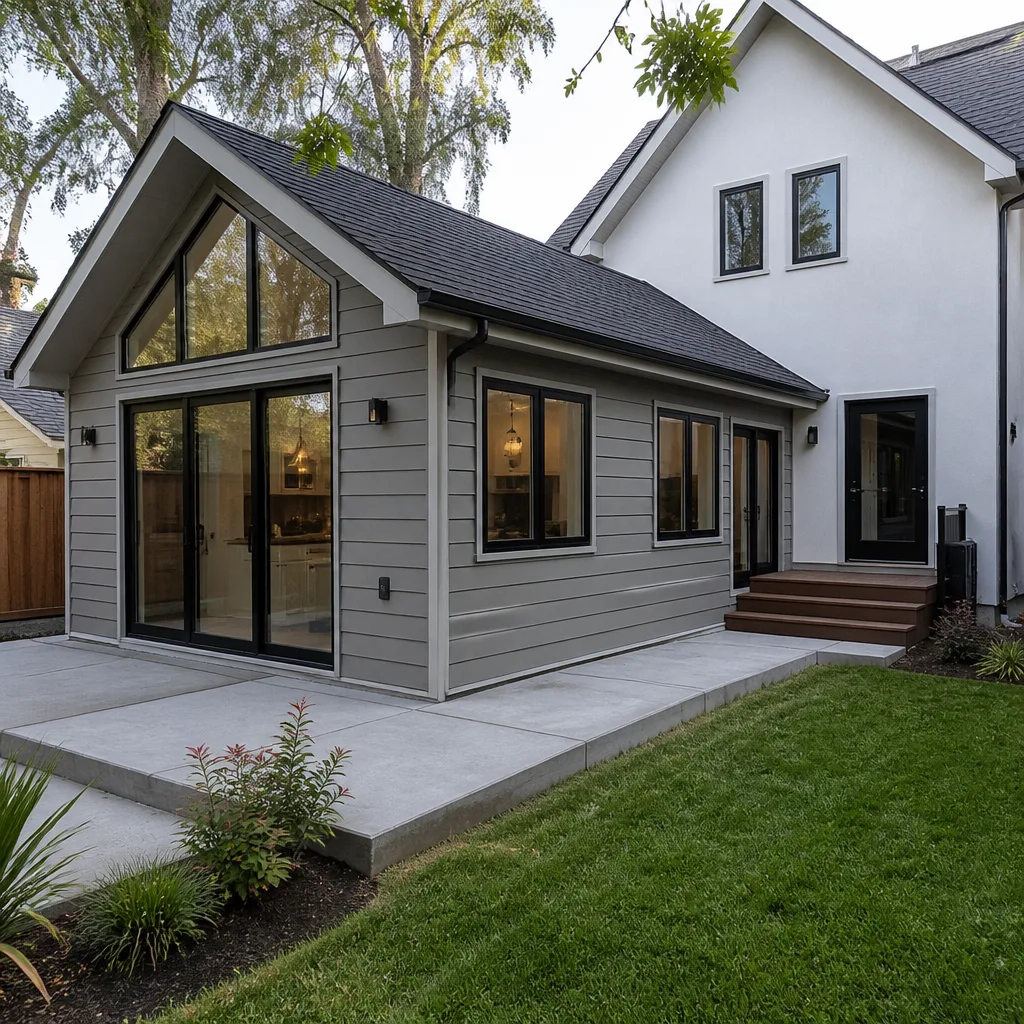 Home additions & ADU
 Kitchen remodeling
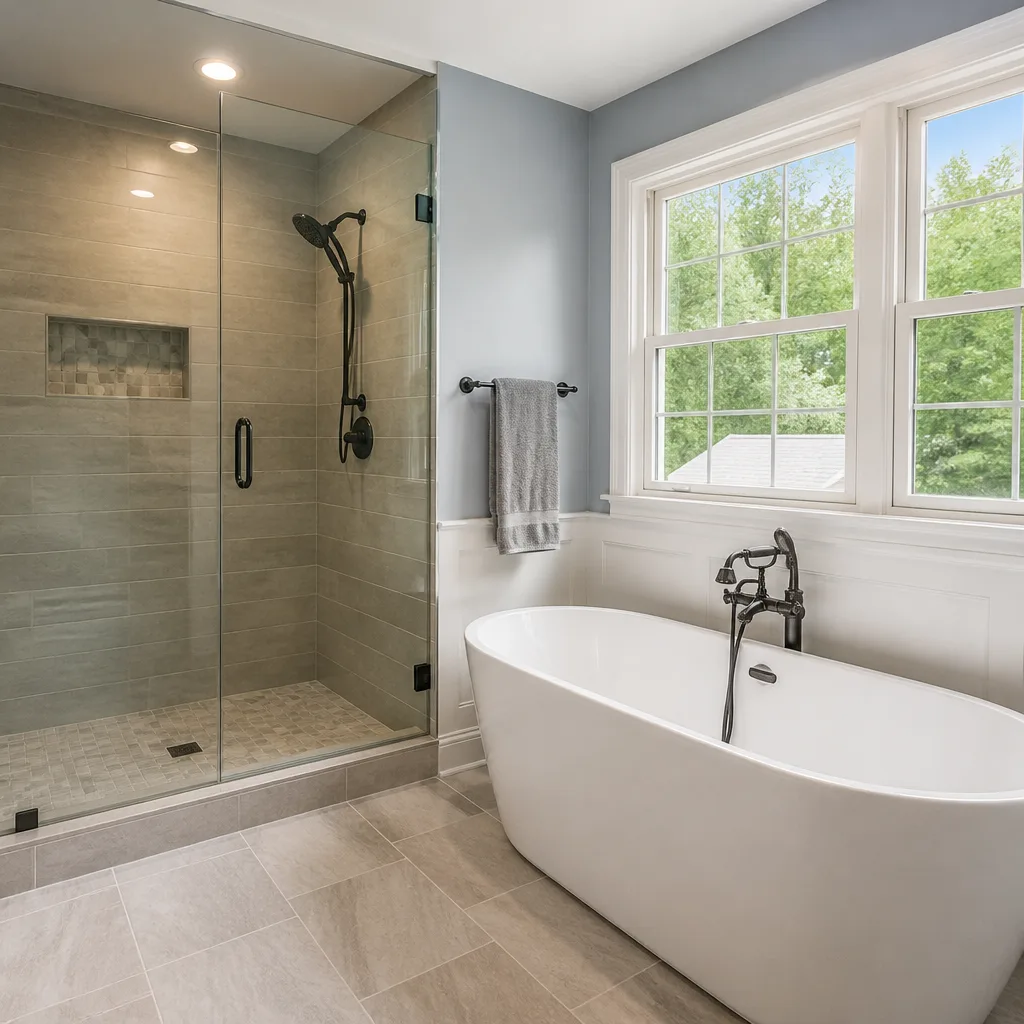 Bathroom remodeling
 Roofing
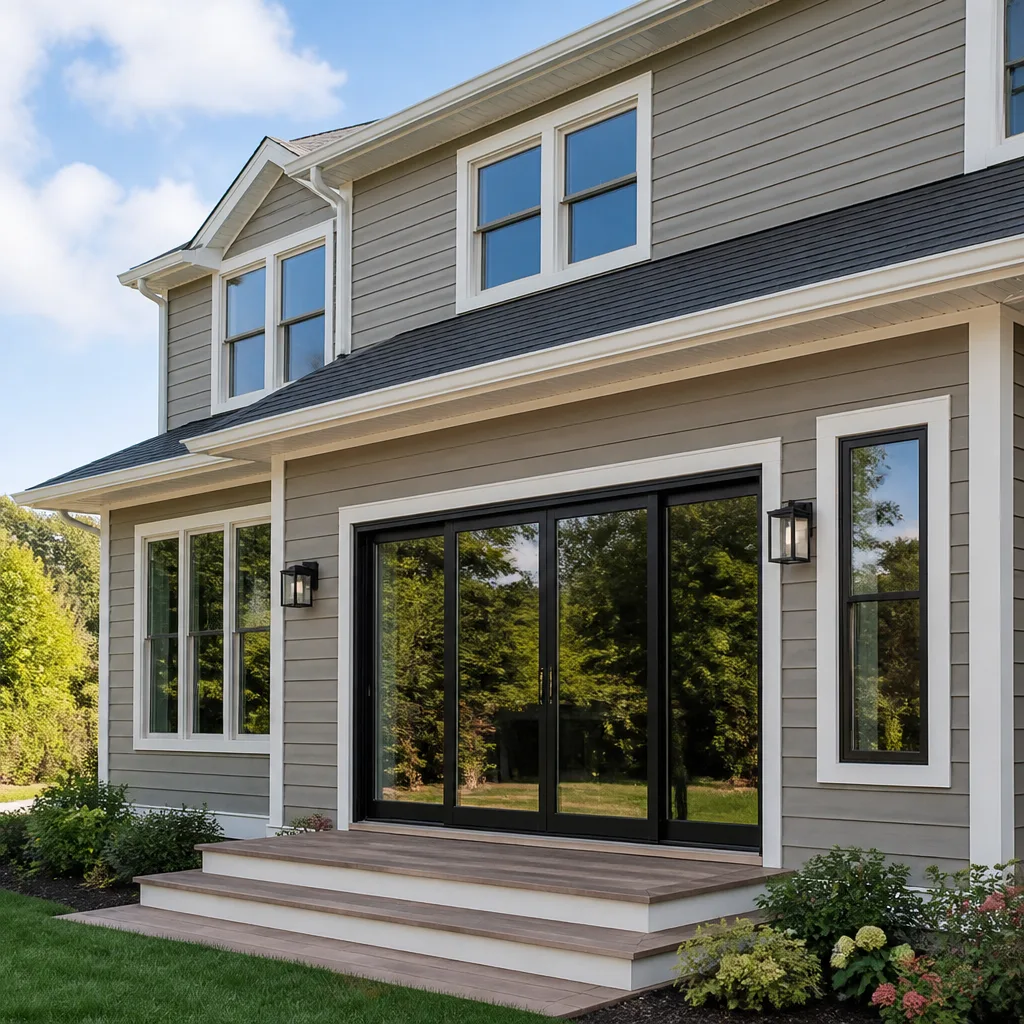 Windows & doors
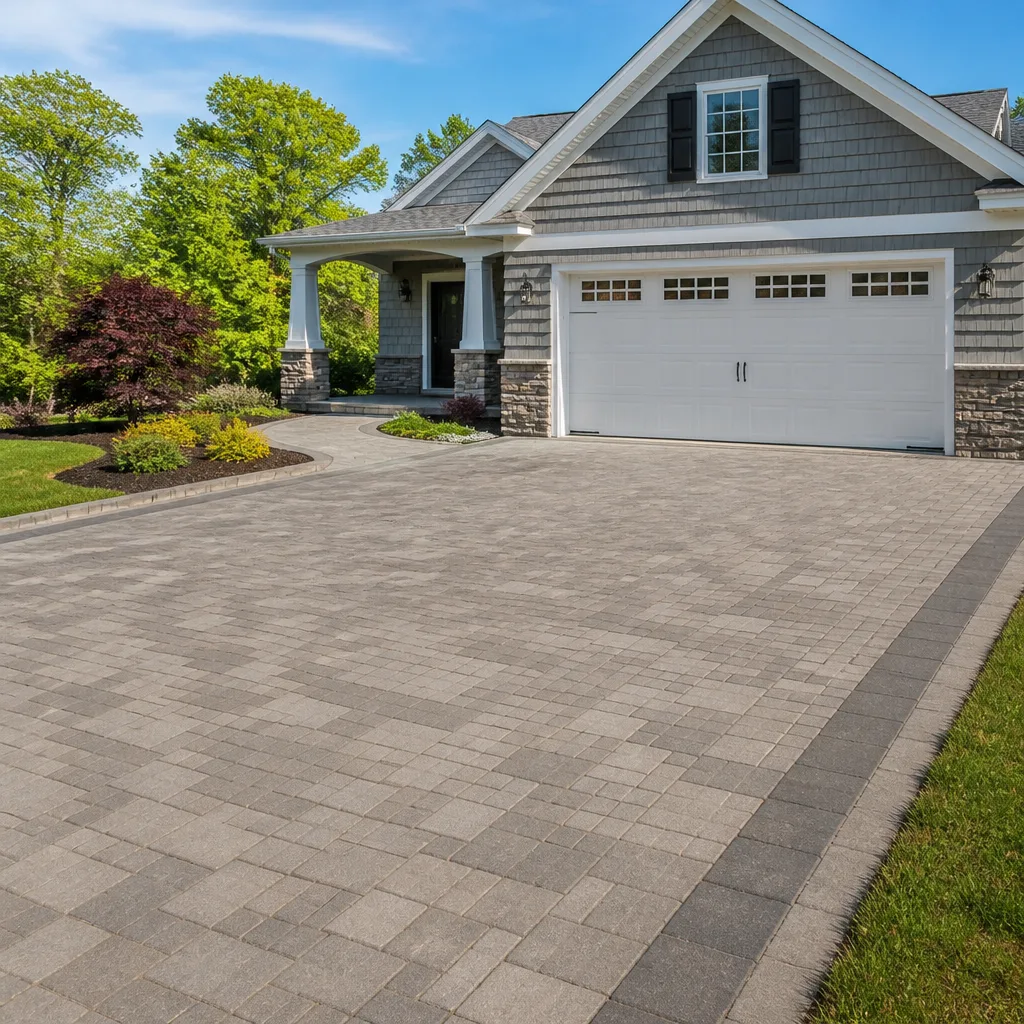 Driveway & pavers
 Fence
Free written scope consultation - allowances, timeline, and change-order rules on paper before a single trade is scheduled
Construction Warning Signs: A Watsonville Homeowner’s Reference Guide
Most construction warning sign guides rehash the same contractor red flags. But Watsonville homeowners face a second layer most guides miss: structural and material warning signs tied to the Pajaro Valley’s expansive clay soil, coastal moisture patterns, and the older ag-era construction methods still present in much of our housing stock. A sticking door here isn’t always a settling house. It can be a symptom of the seasonal clay cycle that shifts foundation elevation by as much as an inch between wet and dry seasons. Knowing which warning signs are routine, which are urgent, and which are cosmetic changes how you respond, what you pay, and whether you need a contractor at all. For help deciding, see our DIY vs Professional Construction: The Watsonville Homeowner’s Decision Guide. This guide covers both the house and the people you hire to work on it, in the specific context of Watsonville.
Styles & brands we work with
Quick Answer
Construction warning signs in Watsonville fall into three categories: structural movement from expansive clay soil, moisture intrusion from our coastal climate, and contractor behavior that signals permit or material problems. The most common structural warning signs are seasonal door sticking, drywall cracks that follow diagonal or stair-step patterns, and floor slopes that change between wet and dry seasons. Urgent signs include horizontal foundation cracks, diagonal cracks wider than 1/4 inch, persistent efflorescence on foundation walls, and any contractor who avoids permits or substitutes materials without written disclosure.
Table of Contents
- Reading Watsonville’s Soil Movement Warning Signs
- Coastal Moisture Intrusion: What the Walls Tell You
- Roof System Warning Signs in Watsonville’s Diffuse Light
- Contractor Warning Signs Specific to Watsonville’s Market
- A Triage Framework: Call Today, Schedule, or Cosmetic
- Material Substitution: When Brand Names Matter
- Additions and ADUs: Warning Signs Before You Build
- Common Mistakes to Avoid
- When to Call a Professional
- Frequently Asked Questions
- The Bottom Line
Reading Watsonville’s Soil Movement Warning Signs
Watsonville sits on some of the most active expansive clay soil in Santa Cruz County. The Corralitos clay series and related soils in the Pajaro Valley swell when wet and shrink when dry. That’s not an occasional problem. It’s an annual cycle. Homes in neighborhoods like the Strawberry Fields corridor, East Lake, and older pockets near downtown Watsonville experience measurable seasonal elevation changes. We’ve measured floor elevations on the same slab in March and September that differ by three-quarters of an inch. That movement produces symptoms.
The most common symptom is a door that sticks for a few months then swings freely. If a door sticks consistently year-round, something else is happening. But a door that sticks every winter after rain and loosens by June is usually reading the soil cycle. The same applies to window frames that bind seasonally. This is normal in Watsonville. It becomes a warning sign when the pattern changes, when a door that used to stick only in winter now sticks in August, or when the movement starts producing visible cracking.
How to Read Cracking Patterns
Drywall cracks have a language. Hairline vertical cracks at drywall seams are cosmetic in nearly every case. But diagonal cracks extending from door corners or window openings, especially on both sides of an opening, indicate racking forces. Stair-step cracks in stucco or block foundation walls follow mortar joints and signal differential settlement. In Watsonville, we look at crack timing. A hairline crack that opens after a dry summer and closes after the first real rain is moisture response. A crack that widens every year regardless of season is progressive movement, and that’s a structural call.
Floor Slope: What’s Normal, What’s Not
- Check with a level or a marble. Set a 4-foot level on the floor. If the bubble is fully outside the lines, you’re over roughly 1/4 inch per foot.
- Compare rooms. A slope that runs through the whole house may be original construction. A slope confined to one corner is recent movement.
- Check seasonally. Mark where the marble rolls in February and again in September. Big differences point to soil response.
- Look at baseboards. Gaps between baseboard and floor, wider at one end, can indicate floor joist or slab movement.
Watsonville’s older pier-and-post homes, common in the ag-era neighborhoods east of Main Street, respond differently than slab foundations. Piers can sink individually. A post that drops half an inch creates a soft spot in the floor above it. Crawlspace inspection is the only way to confirm. If you can access your crawlspace, look for posts that are tipped, piers that are cracked, or wood that sits in standing water after rain.
Coastal Moisture Intrusion: What the Walls Tell You
Watsonville’s marine layer means moisture pressure against building envelopes nearly year-round. Morning fog, winter rain, and the relative humidity off Monterey Bay all push water into places it shouldn’t be. The signs are often subtle until they’re expensive. The Pajaro Valley’s older housing stock, much of it built before modern moisture barriers became standard, is particularly susceptible. We see this concentrated in homes built before the late 1980s, when building paper and flashing details were less reliable.
Efflorescence: White Powder That’s Saying Something
Efflorescence is that white, chalky deposit on concrete foundations, retaining walls, or masonry. It’s caused by water moving through the material and carrying soluble salts to the surface. On its own, it’s not structural. But persistent efflorescence, especially on interior foundation walls or appearing through paint, tells you water is moving through your foundation regularly. In Watsonville, that often means a drainage problem at the perimeter. Downspouts discharging at the foundation, poor grading, or a failed foundation drain system. It’s a warning sign, not a verdict. The fix might be a $400 grading correction or a full drain replacement. You won’t know until you trace the water.
Paint Bubbling and Window Sill Rot
Bubbling paint on exterior walls, especially on the south and west faces, reads differently in Watsonville than in Sacramento. Our moisture comes in horizontal, fog-driven form, not just falling rain. Paint fails from behind when wall cavities stay damp. If you see bubbling paint on stucco or siding that coincides with interior mustiness, suspect cavity moisture. Window sill rot in Watsonville is most common on older wood-frame windows without proper sill flashing. The sill takes direct fog exposure and never fully dries. Soft wood is the warning sign. A screwdriver pressed into the sill shouldn’t sink. If it does, the rot has progressed past the cosmetic layer, and the surrounding framing needs assessment.
Roof System Warning Signs in Watsonville’s Diffuse Light
Watsonville’s overcast conditions hide roof problems. In bright sunlight, missing granules or lifted shingles cast shadows you can spot from the ground. In our diffuse gray light, those warning signs flatten out. You have to look deliberately. The most common roof warning sign we find in Watsonville isn’t a leak. It’s granule loss. Asphalt shingles shed granules as they age, and by the time you see bare spots from the ground, the shingle has already lost significant protective capacity. Check your gutters. Granules collect in gutters and downspout elbows. A handful of granules is normal for a new roof. A thick layer, year after year, means the roof is aging out.
Ridge Cap, Moss, and the Coastal Timeline
Lifted ridge cap shingles are a Watsonville-specific problem because our afternoon winds off the bay hit the ridge line directly. A lifted ridge cap catches wind and begins a peeling process that accelerates quickly. If you can see from the ground that ridge cap shingles are not sitting flat, that’s a call today scenario. It gets worse fast.
Moss colonization follows a predictable timeline here. North-facing roof slopes in Watsonville’s shaded neighborhoods, especially around the Buena Vista and Harkins Slough areas, can grow moss in as little as 18 months on a roof that’s 10 years old. Moss isn’t just unsightly. It lifts shingle edges, holds water against the surface, and in heavy growth can compromise the granule layer. The warning sign is moss that has spread beyond isolated patches into continuous mats. Early isolated patches can be treated. Continuous mats mean the shingle edges are already compromised.
Flashing and Penetration Points
The roof leaks we see in Watsonville most often originate at flashing points, not the shingle field. Chimneys, skylights, vent pipes, and the transition where a roof meets a wall. With our moisture patterns, flashing failure shows up faster than shingle failure. A water stain on the ceiling near a chimney or vent pipe is a warning sign that the flashing has already failed. It’s not a “watch it” situation. Water is entering. The question is only how much damage has accumulated behind the surface. Call that in.
Contractor Warning Signs Specific to Watsonville’s Market
Watsonville’s construction market has a specific pressure: demand driven by coastal housing prices meeting a labor pool that includes both licensed general contractors and unlicensed crews working at lower rates. The warning signs here are not hypothetical. They’re patterns we see repeatedly in projects that go sideways. The single most reliable indicator of a problem is the permit conversation. Any contractor who suggests skipping permits on structural work, or who frames the permit as an optional line item, is telling you something specific about how they operate. Structural work in Watsonville requires permits through the City of Watsonville Building Division. Cosmetic work generally doesn’t. But framing, foundation work, electrical, plumbing, and roofing all do.
The Inspection-Avoidance Behavior Pattern
Contractors who avoid inspections avoid accountability. The pattern is recognizable: they schedule inspections for dates they know the inspector won’t arrive, they “forget” to call for inspection, or they pressure you to move forward with the next phase before the previous one is signed off. A legitimate Watsonville contractor treats inspections as milestones, not obstacles. If your contractor views the inspector as the enemy, you need to understand that the inspector is your only independent verification that work meets code. No inspector means no verification.
Unlicensed Framing Under Permit
A specific warning sign in Watsonville’s market: a contractor who holds a license but pulls permits under that license while unlicensed day labor performs the structural work. It’s legal on its face, but the licensed contractor may not be supervising the work. You can ask directly: who is doing the framing, and are they employees or subcontractors? If subcontractors, ask to see their licenses. The answer reveals how closely your project is being managed. A contractor who can’t name his framing crew off the top of his head is not the person who’s going to catch a structural error before the sheetrock goes up.
A Triage Framework: Call Today, Schedule, or Cosmetic
The most practical skill in construction is triage. Knowing what requires immediate action, what can wait for a scheduled review, and what’s cosmetic keeps you from either panicking or ignoring a real problem. For a systematic approach to staying ahead of issues, see our General Contractor Maintenance Checklist for Watsonville Homeowners. Here’s our framework, built specifically for Watsonville conditions.
Call Today: Urgent Warning Signs
- Horizontal cracks in foundation walls. Vertical cracks happen. Horizontal cracks mean lateral pressure and possible structural displacement.
- Any crack wider than 1/4 inch, regardless of orientation. This is past hairline territory and into movement that requires professional evaluation.
- Water stains on ceilings that grow after rain. Active leak. Every rain event adds damage.
- Doors that suddenly won’t close after a weather event. Sudden movement, not seasonal movement, is the warning.
- Sewer odor indoors. Broken waste line under slab or in wall. This is a health issue as much as structural.
- Soft wood at any exterior penetration. Window sills, door thresholds, deck ledger boards.
Schedule a Contractor Review: Warning Signs That Can Wait
- Seasonal door sticking that follows the rain cycle. Document it for one full season, then have a contractor evaluate the foundation.
- Hairline diagonal cracks at door corners, under 1/8 inch. Track width with pencil marks. If stable across a year, probably cosmetic response.
- Granule accumulation in gutters. Schedule a roof inspection, but this isn’t an emergency if no leaks are present.
- Early moss patches on the north slope. Schedule treatment within a season, but isolated moss won’t destroy a roof in weeks.
- Efflorescence on foundation walls. Not structural on its own, but schedule drainage evaluation before the next rainy season.
Cosmetic: Low Priority
- Hairline vertical cracks at drywall seams. Normal in nearly all homes, especially Watsonville homes with soil movement.
- Minor paint bubbling without interior dampness. Could be original paint failure, not envelope failure. Check inside first.
- Door that rubs slightly, year-round, in a 1960s home. Original framing tolerance. If it’s not changing, it’s not active movement.
- Small cracks in concrete walkways. Unless they’re part of a foundation system, they’re cosmetic.
Material Substitution: When Brand Names Matter
Seaside Contractors works with 50+ brand partners because we’ve learned that material substitutions without disclosure create half the warranty failures we’re called to fix. A client specs a Cambria countertop and gets an off-brand quartz that looks similar. The installer saved $1,200. Two years later, chipping and staining create a situation where the brand’s warranty is void because the material isn’t what the paperwork said. That’s a construction warning sign that happens on paper, not in the walls.
The lesson: verify delivered materials against your contract. It takes ten minutes. Check the boxes in the garage before installation. Check the shingle bundles on the roof before the crew starts nailing. Check the countertop slab when it arrives. If the wrong material shows up, don’t accept it. The fix is cheapest before installation, not after. Cheap materials are not the problem. Undisclosed substitution is the problem. A contractor who will swap Cambria for an unnamed import without telling you will also swap Schluter waterproofing for a generic membrane, or GAF shingles for a no-name brand with a 5-year warranty instead of a 30-year. The brands matter because the warranties and performance characteristics are documented. Undocumented substitution removes the documentation.
Additions and ADUs: Warning Signs Before You Build
Watsonville’s ADU boom has created a specific set of pre-construction warning signs. Prefab ADU manufacturers like Abodu and Cover have changed what’s possible in Watsonville backyards, but the site work and foundation still happen on your property, by local crews. The warning signs before you sign a contract:
- Foundation scope not clearly specified. Watsonville’s expansive soil requires specific foundation engineering. If the contract says “standard foundation,” ask for the engineering detail. There’s no standard foundation in clay country.
- Utility connection costs not itemized. Sewer, water, and power runs to an ADU can cost $15,000 to $40,000 depending on distance and conditions. If the quote doesn’t break these out, they’re either not included or being hidden.
- Site drainage plan missing. Adding a structure changes drainage patterns on your lot. If the plan doesn’t address where water goes after the ADU is built, you’re buying a future moisture problem.
- Manufacturer warranty not transferable. If you sell the house, does the ADU warranty transfer? Abodu and Cover have specific terms. Know them before you build, not when you sell.
We manage ADU projects from foundation through finish because the coordination gap between a manufactured unit and site-built work is where Watsonville ADUs go wrong. The unit itself is factory-built and predictable. The site work is not. One contractor who handles both eliminates the gap between “the factory did it” and “the site crew did it.”
Common Mistakes to Avoid
- Ignoring seasonal patterns because “it’s always done that.” Document the pattern. A door that sticks only in wet months is data. A door that starts sticking in dry months too is a change. Changes are warning signs.
- Painting over efflorescence. The white powder comes back, and now you’ve trapped moisture behind paint. Fix the water path first, then paint.
- Accepting “we’ll handle the permit later” as a plan. In Watsonville, work done before permitting creates liability you own as the property owner. The permit comes first for structural work.
- Treating a roof estimate as a roof inspection. An estimator looks at what’s visible from the ground. An inspection requires actually walking the roof. Insist on it.
- Comparing contractor bids without comparing scope. A lower bid that doesn’t include site engineering on clay soil isn’t cheaper. It’s incomplete.
- Using the wrong material for Watsonville’s moisture. Interior-grade materials don’t belong on exterior applications here. Verify that trim, siding, and fasteners are rated for coastal exposure.
- Waiting until spring to check drainage. Watsonville’s drainage problems show themselves in January and February. Check gutters, downspouts, and grading in fall, before the rain.
When to Call a Professional
You need professional eyes when the warning sign involves structure, active water, or work you can’t verify yourself. Horizontal foundation cracks, sudden movement, active leaks, and any contractor situation involving unpermitted structural work all require a call. You also need a professional when the project spans multiple trades and coordination between them becomes the actual work product. A full kitchen remodel involving cabinetry, countertops, plumbing, and electrical has four potential failure points at the intersections. One contractor who manages all of it means one call when something goes wrong.
Seaside Contractors offers free estimates in Watsonville. Call (833) 589-8103 if you’ve seen a warning sign you can’t confidently categorize, or if you’re planning a project and want the structure and systems evaluated before you commit. We’ll match the material to the project and tell you what’s urgent, what can wait, and what doesn’t matter.
Frequently Asked Questions
Foundation repair in Watsonville typically ranges from $3,500 for minor pier replacement to $40,000+ for full underpinning or foundation replacement, depending on access, soil conditions, and structural extent. Expansive clay soil means some repairs are best scheduled during the dry season when excavation is stable. Call (833) 589-8103 for an exact quote, estimates are free.
A sticking door can absolutely be a foundation problem in Watsonville, and it’s often the first visible sign of soil movement. The tell is seasonality: if the door sticks after rain and releases in dry months, the slab is responding to clay swell. If the sticking is year-round, it’s more likely framing, hinge, or original construction tolerance.
Yes, permits are pulled for structural, electrical, plumbing, and roofing work in Watsonville, and inspections are a standard part of the process. Any project that changes structure or systems requires City of Watsonville Building Division review. We handle the permit process as part of the project scope.
A full kitchen remodel in Watsonville typically takes 8 to 12 weeks from demolition to final walkthrough, depending on material lead times and structural findings. Custom cabinetry through lines like KraftMaid or Wellborn can add 4 to 6 weeks of lead time. We sequence material orders before demolition starts to keep the project moving.
Moss is serious when it forms continuous mats that lift shingle edges and hold water against the roof surface. Isolated patches on a north slope are treatable and not urgent. Continuous moss on a roof over 15 years old usually means the shingles underneath are already compromised and a roof evaluation makes sense.
A warning sign is an indicator that conditions exist for damage, while actual damage is the failure itself. Efflorescence warns of water movement; a rotted sill is the damage. Seasonal door sticking warns of soil movement; a cracked foundation is the damage. Acting on warning signs is always cheaper than repairing confirmed damage.
The Bottom Line
Watsonville homes speak through their floors, walls, and roofs, and the language is specific to our clay soil and coastal moisture. Learn to read the signs: seasonal patterns are normal until they change; diagonal cracks are more serious than vertical ones; moisture problems always trace back to a water path; and contractor behavior around permits and materials predicts project outcomes more reliably than any review. You don’t need to become a structural engineer. You need a framework for knowing what’s urgent and what can wait, and a contractor who will tell you the difference honestly. For more guides & resources on protecting your Watsonville home, explore our blog. That’s the whole job, from blueprint to final walkthrough.
Written by the team at Seaside Contractors, serving Watsonville since 2013.
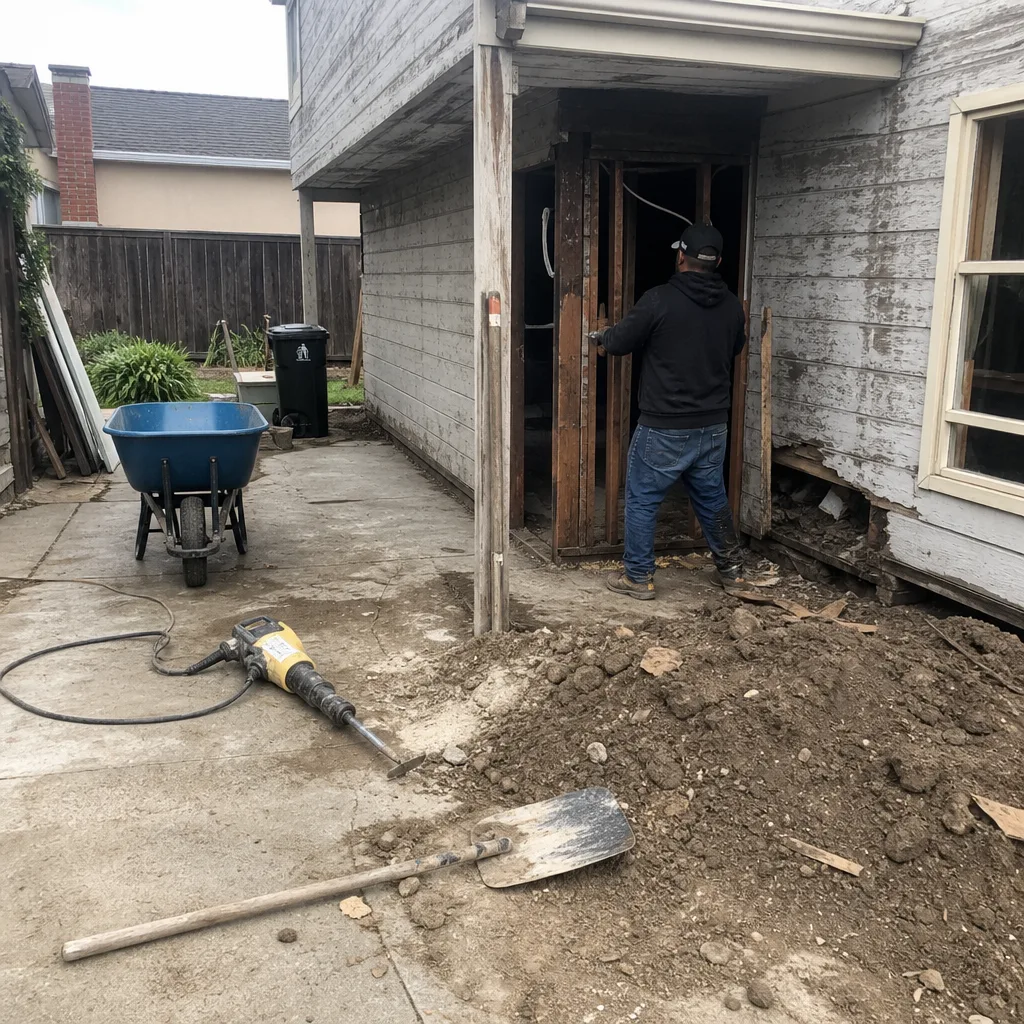
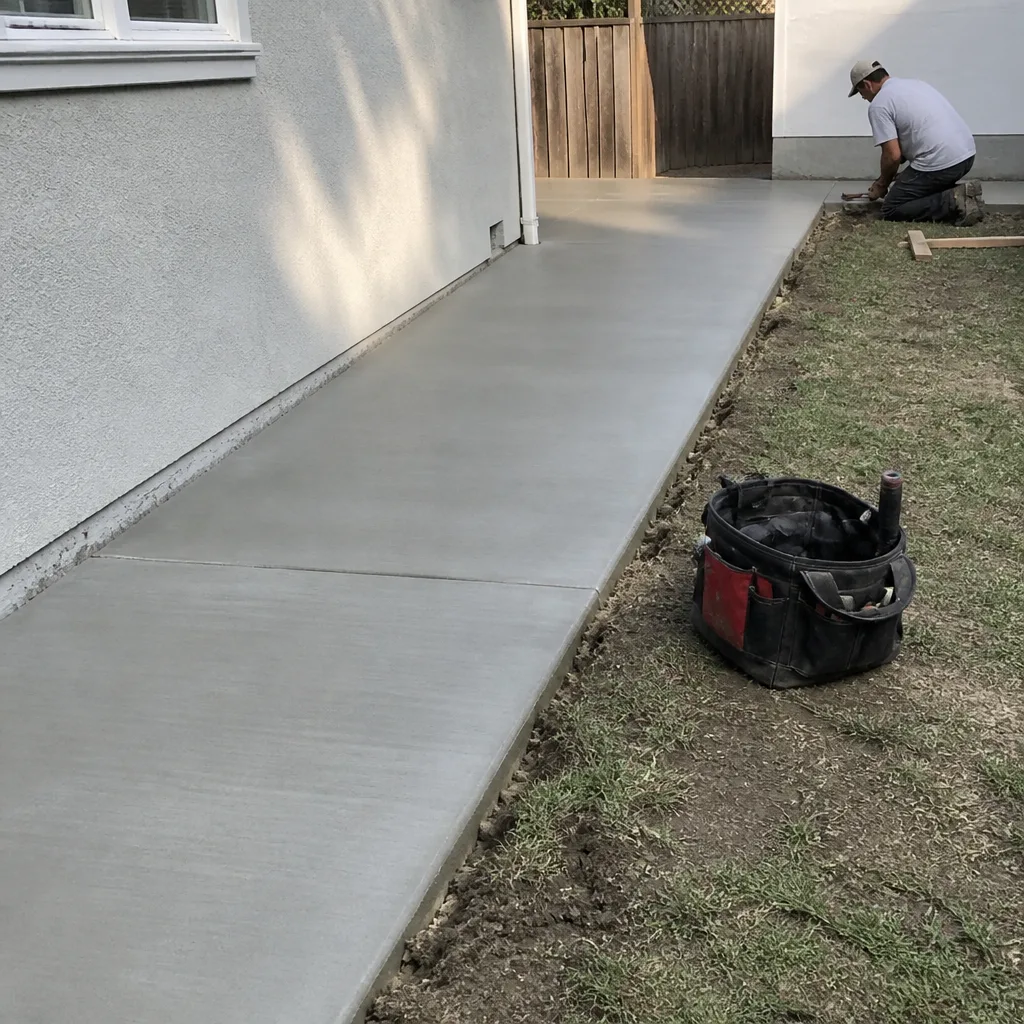
See the difference
 Before
 After
 Before
 After
 Before
 After